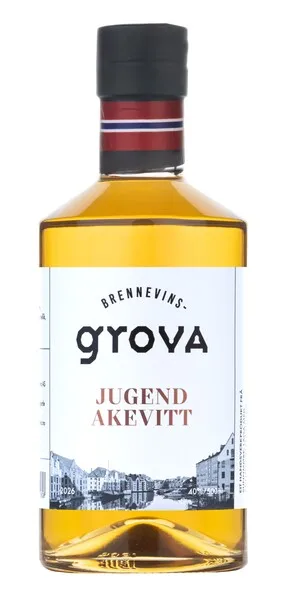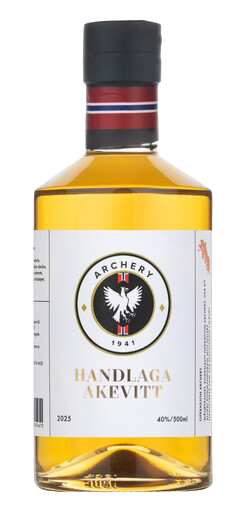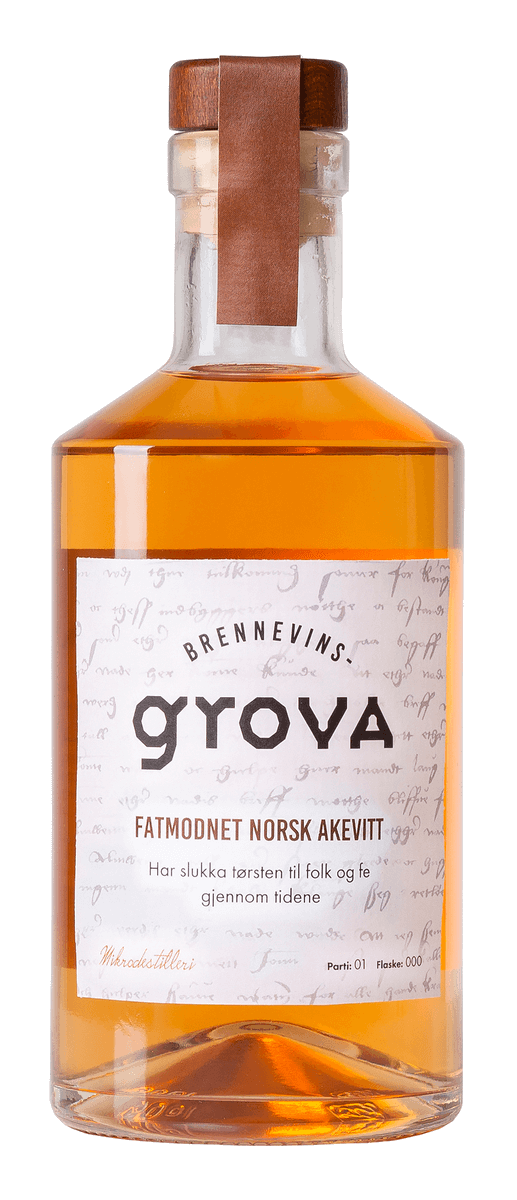
Barrel-ripened Norwegian aquavit
The production
The starting point for making Norwegian aquavit is pure spirits made from a minimum of 95% Norwegian potatoes. The spirit is pumped into the column distillery, together with spices and meltwater from glaciers in the Sunnmørsalpane. Then it is stored in oak barrels, first in French oak barrels, later in Madeira barrels. The requirement for Norwegian aquavit is that it must be stored for a minimum of 6 months for barrels smaller than 1000 liters. If the barrel is larger than 1000 liters, the aquavit must be stored for a minimum of 12 months. The barrels we use are 50 and 250 liter barrels. The aquavit does not contain added sugar or other additives, nor is it filtered by cooling.
The label
The background of the label shows a section of a letter that is to be the first mention of aquavit in Norway. The letter, which is dated 13 April 1531, was sent from the sheriff of Bergenhus, Eske Bille, to Archbishop Olav Engelbrektsson, who had his headquarters in the archbishop's palace in Trondheim. Here the sheriff writes that he sends with some water called "Aqua vite" and which helps against all kinds of illness a person may have internally.
The aquavit spice
The spice in aquavit was thus originally chosen on the basis of medicinal effect on the body - hence the name Aqua vita. Many people know the effect aquavit has on digestion, but the fact that caraway is supposed to cure unfaithful husbands is probably a lesser known effect. Aquavit is most often drunk bare, ie unmixed. But there are also aquavit-based drinks, such as a variant of Irish coffee where you mix aquavit, coffee and cream. Some people prefer to cool it down, often in a freezer, something that dampens the taste of the caraway. Connoisseurs prefer to serve it at room temperature, because then all the aroma will be released. It can be drunk separately as an aperitif or as a drink after the meal, but it is usually on the table with fatty foods. Regardless - enjoy our cask-aged aquavit!